

ELV System Installation Process Step-by-Step
Once a building’s ELV design is approved, the real work begins on-site. Unlike a single trade like plumbing or lighting, ELV system installation touches nearly every floor and every room — CCTV cameras in corridors, access control at doors, data cabling above ceilings, and speaker systems tied into the fire alarm network. If it isn’t sequenced correctly, delays and rework pile up fast.
This guide walks through the full elv system installation process step-by-step, from planning through final handover, with a focus on how it typically plays out on construction sites across the UAE. If you’re still getting familiar with the basics, it’s worth first reading our earlier guide on elv system meaning, which covers what ELV actually includes before diving into how it gets installed.
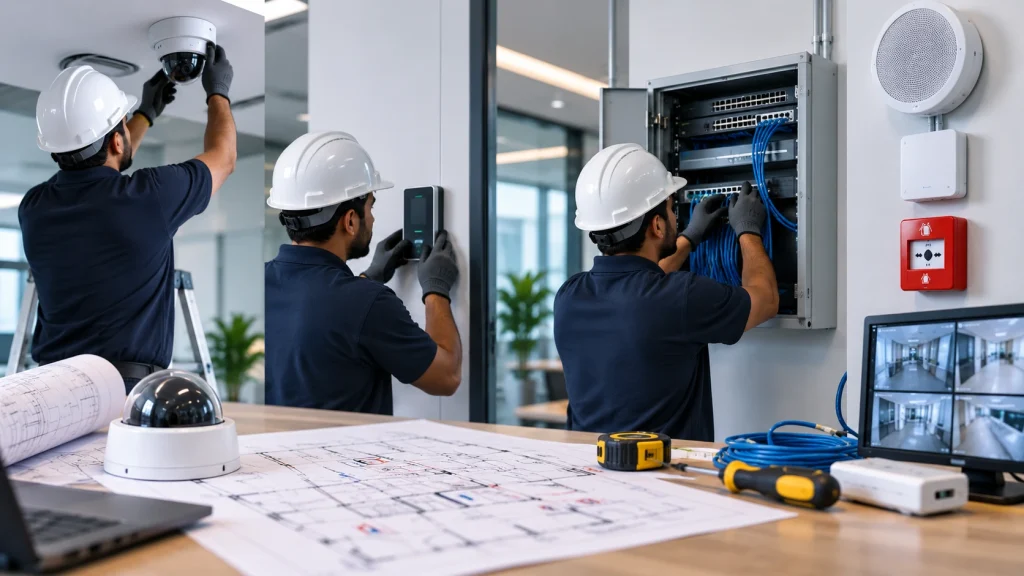
Step 1: Design Review and Coordination
Before any cabling or equipment reaches the site, the installation team reviews the approved ELV drawings alongside architectural, electrical, and HVAC layouts. This coordination step catches clashes early — for example, a CCTV camera position that conflicts with a duct run, or a data cabinet location that overlaps with an electrical panel.
In the UAE, this stage also involves confirming that drawings have received the necessary approvals from civil defense and telecom authorities such as du or e& (Etisalat), since structured cabling and certain security systems require sign-off before work proceeds.
Step 2: Containment and First-Fix Works
“Containment” refers to the physical pathways — conduits, trunking, cable trays, and back boxes — that will eventually carry ELV cabling throughout the building. This is typically installed during the building’s first-fix stage, often before walls are closed up or false ceilings go in.
Key tasks in this phase include:
- Installing cable trays and conduits along designated routes
- Mounting back boxes for cameras, access readers, and speakers
- Coordinating containment paths with electrical and mechanical contractors to avoid interference
- Ensuring fire-rated sleeves and penetrations are used where containment passes through fire-rated walls or floors
Getting this step right matters more than it might seem — poorly planned containment is one of the most common causes of costly rework later in a project.
Step 3: Cable Pulling and Second-Fix Preparation
With containment in place, technicians pull the actual cabling — structured data cables, coaxial cables for CCTV, speaker wiring for the PA system, and control wiring for access control devices. Cables are labeled at both ends to match the ELV drawing references, which makes testing and troubleshooting far easier later on.
This stage typically happens after the building envelope is closed but before final finishes (flooring, false ceilings, wall panels) are completed, since technicians still need access to containment routes.
Step 4: Equipment Installation (Second Fix)
Once finishes are nearing completion, the actual ELV devices are installed:
- CCTV cameras mounted and aligned to their intended coverage zones
- Access control readers, biometric devices, and electronic locks fitted at doors
- PA/voice evacuation speakers installed in ceilings or walls
- Intercom and video door phone units mounted at entrances
- Structured cabling patch panels and network switches installed in data cabinets
- Home/building automation panels and sensors fitted in rooms
Each device is connected back to its respective control panel or head-end system — the CCTV network video recorder (NVR), the access control server, the PA amplifier, or the BMS front end.
Step 5: System Integration
This is where individual ELV subsystems start working together. Integration tasks include:
- Linking the PA system with the fire alarm panel so evacuation announcements trigger automatically during an alarm event
- Connecting CCTV and access control systems to a centralized security management platform
- Integrating ELV subsystems into the building’s overall BMS, allowing facility staff to monitor everything from one dashboard
- Configuring network switches and structured cabling to support both current needs and future capacity
In larger UAE developments — hotels, malls, and commercial towers — this integration stage is often the most technically demanding part of the entire installation, since multiple vendors and subcontractors need to align their systems.
Step 6: Testing and Commissioning
Before any system goes live, it must be tested thoroughly:
- Continuity and cable testing to confirm no cabling faults exist
- Device-level testing — checking each camera’s field of view, each access reader’s response, each speaker’s audio clarity
- Functional testing of integrated systems, such as confirming PA announcements trigger correctly during a simulated fire alarm
- Load and network testing for structured cabling to ensure data speeds meet design specifications
Commissioning reports are typically compiled for each subsystem and submitted for client and authority review.
Step 7: Authority Inspection and Approval
In the UAE, ELV systems — particularly fire-related components like PA/voice evacuation and its integration with fire alarm systems — usually require inspection and sign-off from civil defense authorities before the building can receive its completion certificate. Telecom-related ELV infrastructure may also need separate approval from the relevant service provider.
Step 8: Handover and Documentation
The final step includes:
- As-built drawings reflecting any changes made during installation
- Operation and maintenance (O&M) manuals for each ELV subsystem
- Warranty documentation for installed equipment
- Training sessions for the building’s facilities management team on how to operate and maintain the systems
Proper documentation at this stage saves significant time and cost for the building owner down the line, especially when troubleshooting issues or planning future upgrades.
Common Pitfalls to Avoid
- Skipping design coordination and discovering clashes only during installation
- Poor cable labeling, making future troubleshooting far more difficult
- Delaying integration testing until the very end of the project, leaving little time to fix issues
- Not accounting for UAE-specific approval timelines from civil defense or telecom authorities
Final Thoughts
ELV system installation is a multi-stage process that depends heavily on sequencing, coordination, and testing discipline. Done well, it results in a building where security, communication, and safety systems work together seamlessly — exactly what today’s UAE developments are expected to deliver.
If you’re planning a project and need ELV installation managed from design through commissioning, our team can guide the process end-to-end. You can also revisit our earlier post on elv system meaning for a refresher on what these systems actually include before installation begins.
